jueves, 19 de febrero de 2015
COUNTABLE AND UNCOUNTABLE NOUNS
INFORMATION ABOUT COUNTABLE AND UNCOUNTABLE NOUNS
Exercise 1.
Exercise 2.
How much and how many......
Some and Any.
How much and how many.......
GAME Some and any
miércoles, 11 de febrero de 2015
SIMPLE PRESENT VS PRESENT CONTINUOUS
If you need more information related to present continuous go to the following link:
Present continuous.
Let's practice.
Present simple vs present continuous
Present simple vs present continuous 2.
Present contiuous
Games
Game 1
Game 2
SONG
martes, 3 de febrero de 2015
JUST TO PRACTICE!!!
TASK:
Click on "simple present exercise", download the document in your computer and answer it, when you've finished, send it to your personal e-mail and print it at home, do not forget to write your name, date, and group. Write the answers in bold. Everything has to be done in computer. You have to bring this exercise next class.
Be careful with your activity's presentation. And remember that if you were not in the class this activity will not be counted as part of classwork.
SIMPLE PRESENT EXERCISE.
SIMPLE PRESENT GAME
VERB TO BE GAME
WH- QUESTIONS GAME
SONG.
domingo, 25 de enero de 2015
IMPORTANT (Useful tips)
1. Study Alone
Unless you've got a couple of friends who are super-serious about getting down to business, stay away from group study sessions because they tend to get off-topic pretty quickly. Save the social time till after you've handed in your test.2. Create Your Perfect Study Area
The place where you study should be quiet, comfortable and free from distractions. Go to your room, close the door and kill as many distractions as possible - like music, television, and even the internet and your phone. If you don't have your own room that you can sneak away to, consider studying at the library instead.3. Get it All Out
Your study materials, that is. Before you dig in, make sure you
have all your books, notes, study guides and writing utensils in front
of you. Don't give yourself another excuse to get up and rummage
around.
4. Turn Your Notes into Flash Cards
Now that you've got all your notes in front of you, open up a pack of index cards. As you read through the important facts, rewrite them in Q&A form on the cards.5. Snack Healthy While You Study
If you want to stay sharp while you study, stay away from junk food. Instead, snack on studying friendly foods like dark leafy greens, whole grains, peanut butter, milk and seafood. Feeling sluggish? Caffeine or energy drinks won't help you in the long run. Get your energy boost instead by eating a banana or an apple.6. Narrow it Down
If you try to study every single thing your teacher's ever said, you'll go crazy. Instead, focus on the most important topics. If you're not sure what those are, read the study guide (if there is one -blog-), or ask your classmates. Once you've nailed down the important stuff, if there's still time left before the test, you can move onto the finer details.8. Put Yourself to the Test
Once you've got your set of flash cards, test yourself with them. If you don't trust yourself not to cheat, give the cards to your parents and have them test you. Don't stop till you've made it through the whole stack without any mistakes. And be sure to bring your flash cards to school with you on the day of the test: you'll be amazed at how much more you can retain if you run through the cards right before your teacher hands out the test packet.9. Get Some Sleep
You might be tempted to pull an all-nighter, but if you do, you'll only be hurting your chances of getting an A. Get a full 8 hours of sleep so your brain is in good shape on test day.10. Study All Semester Long
It's tempting to hold off on studying till the last minute, especially if you tell yourself that anything you try to memorize earlier on won't really stay in your brain. That's not true. Take some time throughout the semester to review all of your notes and re-read important passages in your text book. It might seem tedious, but it'll really keep all those facts in your brain on test day.FREQUENCY ADVERBS
We use some adverbs to describe how frequently we do an activity.
These are called adverbs of frequency and include:
| Frequency | Adverb of Frequency | Example Sentence |
|---|---|---|
| 100% | always | I always go to bed before 11pm. |
| 90% | usually | I usually have cereal for breakfast. |
| 80% | normally / generally | I normally go to the gym. |
| 70% | often* / frequently | I often surf the internet. |
| 50% | sometimes | I sometimes forget my wife's birthday. |
| 30% | occasionally | I occasionally eat junk food. |
| 10% | seldom | I seldom read the newspaper. |
| 5% | hardly ever / rarely | I hardly ever drink alcohol. |
| 0% | never | I never swim in the sea. |
The Position of the Adverb in a Sentence
An adverb of frequency goes before a main verb (except with To Be).| I always remember to do my homework. |
| He normally gets good marks in exams. |
An adverb of frequency goes after the verb To Be.
| Subject + to be + adverb |
|---|
| They are never pleased to see me. |
| She isn't usually bad tempered. |
When we use an auxiliary verb (have, will, must, might, could, would, can, etc.), the adverb is placed between the auxiliary and the main verb. This is also true for to be.
| Subject + auxiliary + adverb + main verb |
|---|
| She can sometimes beat me in a race. |
| I would hardly ever be unkind to someone. |
| They might never see each other again. |
| They could occasionally be heard laughing. |
We can also use the following adverbs at the start of a sentence:
Usually, normally, often, frequently, sometimes, occasionally
- Occasionally, I like to eat Thai food.
Always, seldom, rarely, hardly, ever, never.
We use hardly ever and never with positive, not negative verbs:
- She hardly ever comes to my parties.
- They never say 'thank you'.
- Have you ever been to New Zealand?
- I haven't ever been to Switzerland. (The same as 'I have never been Switzerland').
- every day - once a month - twice a year - four times a day - every other week
lunes, 19 de enero de 2015
PREPOSITIONS OF TIME AND PLACE
What is a preposition?
A preposition describes a relationship between other words in a sentence.
In itself, a word like "in" or "after" is rather meaningless and hard to define in mere words.
For instance, when you do try to define a preposition like "in" or "between" or "on," you invariably use your hands to show how something is situated in relationship to something else. Prepositions are nearly always combined with other words in structures called prepositional phrases.
If you want to know more about prepositions, try the following link.
Click here: Prepositions
Before doing the exercises try this video it is very useful.
PREPOSITIONS OF TIME EXERCISE 1.
PREPOSITIONS OF TIME. EXERCISE 2.
PREPOSITIONS OF TIME. EXERCISE 3.
PREPOSITIONS OF TIME. EXERCISE 4.
PREPOSITIONS OF TIME. EXERCISE 5. (Try this one, it is very useful)
PREPOSITIONS OF PLACE
PREPOSITIONS OF PLACE. EXERCISE 1
PREPOSITIONS OF PLACE. EXERCISE 2.
PREPOSITIONS OF PLACE. GAMES.
SIMPLE PRESENT.
domingo, 18 de enero de 2015
SPEAKING RUBRIC (Family tree)
Here you will find the speaking rubric that you have to print and bring on Monday 19/01/2015.
You have to bring it all your classes up to you have your speaking assessment. Remember that the day of your exam will be at random so you have to be prepared since Monday.
SPEAKING RUBRIC
lunes, 12 de enero de 2015
SIMPLE PRESENT
The simple present tense in English is used to describe an action that is regular, true or normal.
We use the present tense:
1. For repeated or regular actions in the present time period.
We form the present tense using the base form of the infinitive (without the TO).
In general, in the third person we add 'S' in the third person.
The spelling for the verb in the third person differs depending on the ending of that verb:
1. For verbs that end in -O, -CH, -SH, -SS, -X, or -Z we add -ES in the third person.
Don't = Do not
Doesn't = Does not
I don't like meat = I do not like meat.
There is no difference in meaning though we normally use contractions in spoken English.
* Verb: The verb that goes here is the base form of the infinitive = The infinitive without TO before the verb. Instead of the infinitive To have it is just the have part.
Remember that the infinitive is the verb before it is conjugated (changed) and it begins with TO. For example: to have, to eat, to go, to live, to speak etc.
Examples of Negative Sentences with Don't and Doesn't:
To make a question in English we normally use Do or Does. It has no translation in Spanish though it is essential to show we are making a question. It is normally put at the beginning of the question.
We DON'T use Do or Does in questions that have the verb To Be or Modal Verbs (can, must, might, should etc.)
*Verb: The verb that goes here is the base form of the infinitive = The infinitive without TO before the verb. Instead of the infinitive To have it is just the have part.
Remember that the infinitive is the verb before it is conjugated (changed) and it begins with TO. For example: to have, to eat, to go, to live, to speak etc.
Examples of Questions with Do and Does:
However, if a question word such as who, when, where, why, which or how is used in the question, you can not use the short answers above to respond to the question.
SIMPLE PRESENT EXERISES. CLICK HERE.
SIMPLE PRESENT EXERCISES II. CLICK HERE.
SIMPLE PRESENT EXERCISES III. CLICK HERE.
SIMPLE PRESENT EXERCISE IV. CLICK HERE.
SIMPLE PRESENT EXERCISES V. CLICK HERE.
SIMPLE PRESENT EXERCISES VI. CLICK HERE.
SIMPLE PRESENT QUESTIONS.
SIMPLE PRESENT SENTENCES AND QUESTIONS.
CLICK ON THE ARROW TO SEE THE VIDEO.
The simple present tense in English is used to describe an action that is regular, true or normal.
We use the present tense:
1. For repeated or regular actions in the present time period.
- I take the train to the office.
- The train to Berlin leaves every hour.
- John sleeps eight hours every night during the week.
- The President of The USA lives in The White House.
- A dog has four legs.
- We come from Switzerland.
- I get up early every day.
- Carol brushes her teeth twice a day.
- They travel to their country house every weekend.
- It rains a lot in winter.
- The Queen of England lives in Buckingham Palace.
- They speak English at work.
Verb Conjugation & Spelling
In general, in the third person we add 'S' in the third person.
| Subject | Verb | The Rest of the sentence | |||||||
|---|---|---|---|---|---|---|---|---|---|
| I / you / we / they | speak / learn | English at home | |||||||
| he / she / it | speaks / learns | English at home |
The spelling for the verb in the third person differs depending on the ending of that verb:
1. For verbs that end in -O, -CH, -SH, -SS, -X, or -Z we add -ES in the third person.
- go – goes
- catch – catches
- wash – washes
- kiss – kisses
- fix – fixes
- buzz – buzzes
- marry – marries
- study – studies
- carry – carries
- worry – worries
- play – plays
- enjoy – enjoys
- say – says
Negative Sentences in the Simple Present Tense
To make a negative sentence in English we normally use Don't or Doesn't with all verbs EXCEPT To Be and Modal verbs (can, might, should etc.).- Affirmative: You speak French.
Negative: You don't speak French.
- Affirmative: He speaks German.
Negative: He doesn't speak German.
Negative Contractions
Don't = Do not
Doesn't = Does not
I don't like meat = I do not like meat.
There is no difference in meaning though we normally use contractions in spoken English.
Word Order of Negative Sentences
The following is the word order to construct a basic negative sentence in English in the Present Tense using Don't or Doesn't.| Subject | don't/doesn't | Verb* | The Rest of the sentence |
|---|---|---|---|
| I / you / we / they | don't | have / buy eat / like etc. | cereal for breakfast |
| he / she / it | doesn't |
* Verb: The verb that goes here is the base form of the infinitive = The infinitive without TO before the verb. Instead of the infinitive To have it is just the have part.
Remember that the infinitive is the verb before it is conjugated (changed) and it begins with TO. For example: to have, to eat, to go, to live, to speak etc.
Examples of Negative Sentences with Don't and Doesn't:
- You don't speak Arabic.
- John doesn't speak Italian.
- We don't have time for a rest.
- It doesn't move.
- They don't want to go to the party.
- She doesn't like fish.
Questions in the Simple Present Tense
To make a question in English we normally use Do or Does. It has no translation in Spanish though it is essential to show we are making a question. It is normally put at the beginning of the question.
- Affirmative: You speak English.
Question: Do you speak English?
- Affirmative: He speaks French.
Question: Does he speak French?
We DON'T use Do or Does in questions that have the verb To Be or Modal Verbs (can, must, might, should etc.)
Word Order of Questions with Do and Does
The following is the word order to construct a basic question in English using Do or Does.| Do/Does | Subject | Verb* | The Rest of the sentence |
|---|---|---|---|
| Do | I / you / we / they | have / need want etc. | a new bike? |
| Does | he / she / it |
*Verb: The verb that goes here is the base form of the infinitive = The infinitive without TO before the verb. Instead of the infinitive To have it is just the have part.
Remember that the infinitive is the verb before it is conjugated (changed) and it begins with TO. For example: to have, to eat, to go, to live, to speak etc.
Examples of Questions with Do and Does:
- Do you need a dictionary?
- Does Mary need a dictionary?
- Do we have a meeting now?
- Does it rain a lot in winter?
- Do they want to go to the party?
- Does he like pizza?
Short Answers with Do and Does
In questions that use do/does it is possible to give short answers to direct questions as follows:| Sample Questions | Short Answer (Affirmative) | Short Answer (Negative) |
|---|---|---|
| Do you like chocolate? | Yes, I do. | No, I don't. |
| Do I need a pencil? | Yes, you do. | No, you don't. |
| Do you both like chocolate? | Yes, we do. | No, we don't. |
| Do they like chocolate? | Yes, they do. | No, they don't. |
| Does he like chocolate? | Yes, he does. | No, he doesn't. |
| Does she like chocolate? | Yes, she does. | No, she doesn't. |
| Does it have four wheels? | Yes, it does. | No, it doesn't. |
However, if a question word such as who, when, where, why, which or how is used in the question, you can not use the short answers above to respond to the question.
SIMPLE PRESENT EXERISES. CLICK HERE.
SIMPLE PRESENT EXERCISES II. CLICK HERE.
SIMPLE PRESENT EXERCISES III. CLICK HERE.
SIMPLE PRESENT EXERCISE IV. CLICK HERE.
SIMPLE PRESENT EXERCISES V. CLICK HERE.
SIMPLE PRESENT EXERCISES VI. CLICK HERE.
SIMPLE PRESENT QUESTIONS.
SIMPLE PRESENT SENTENCES AND QUESTIONS.
CLICK ON THE ARROW TO SEE THE VIDEO.
domingo, 21 de septiembre de 2014
LET´S START OUR SECOND "DEPARTAMENTAL"
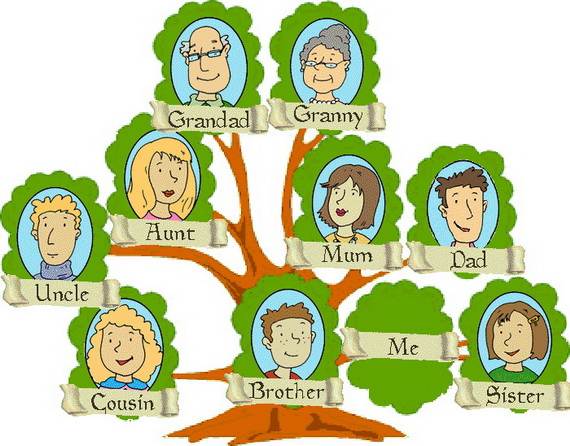
FAMILY TREE
The first thing that you have to do this second part of the course, is the following:
1.- In US letter size sheet of paper, you have to design a very original and colorful family tree.
2.- You have to include grandparents, parents, aunts, cousins, nephews, half sisters, etc., not less than 10 relatives.
3.- You have to draw their faces, paste photographs or at least write their names on the family tree. Include the relationship below the photograph, drawing or name.
4.- Write name, date and group at the top right corner of the cardboard.
5.- Neatness is a must in this activity.
6.- No spelling mistakes will be accepted.
Having done this, you have to write some sentences referring to the family members you included in your family tree. You have to use the structures that you have already learnt have got, there is, there are, this, that, those, possessive adjectives, 's , verb to be, plurals.
Example:
This is my family tree, and as you can see there are 4 men in my family, my grandfather, my uncle, my dad and my brother. My grandfather´s name is Robert, he is 68 years old, he is a carpenter...... etc.
In this second activity, punctuation, capitalization and spelling will be marked. Try to write short and well structured sentences to avoid having too many mistakes. Write a title. Write name, date and group at the top right corner. You have to write it using Arial 12' (type of letter).
This activity has to be delivered on september the 30th. Groups IM04,IM06,IM07, IM15
and on October the 1st. Group IM03.
HERE ARE SOME IDEAS.
This exercises will help you to structure your sentences in a better way.
domingo, 7 de septiembre de 2014
LABORATORY ACTIVITIES TO BE MARKED
Today you have to do the following.
1.-Click on application form and the dialogue.
2.-Save them on the computer.
3.-Fill in the application form and answer the dialogue's fill in the blank exercise.
4.-Send both activities to your personal e-mail.
5.-Print both activities and bring them next class. This activities will be part of your mark.
CLICK HERE: APPLICATION FORM
CLICK HERE: DIALOGUE
IT'S TIME TO WORK HARDER.
Remember that this week we are going to start our exams period.
So it is a must to be on time !!!!!
To attend to all your classes.
To deliver all your assignments.
The way I'am going to grade this "departamental", is the following.
Reading = 5%
Writing = 5%
Listening = 5%
Class Activities = 5% (Computing laboratory)
Use of English = 5%
This "departamental" I will not grade speaking, I will do this later on.
TOTAL = 25% = 10
You have to study:
- Greetings and introductions.
- Verb to be. Affirmative, negative, questions and short answers.
- Have got / has got. Affirmative, negative, questions and short answers.
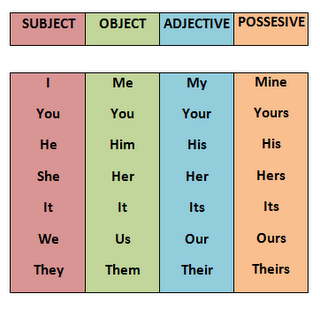
- Possessive adjectives.(my,your, his, her, its, our, their)
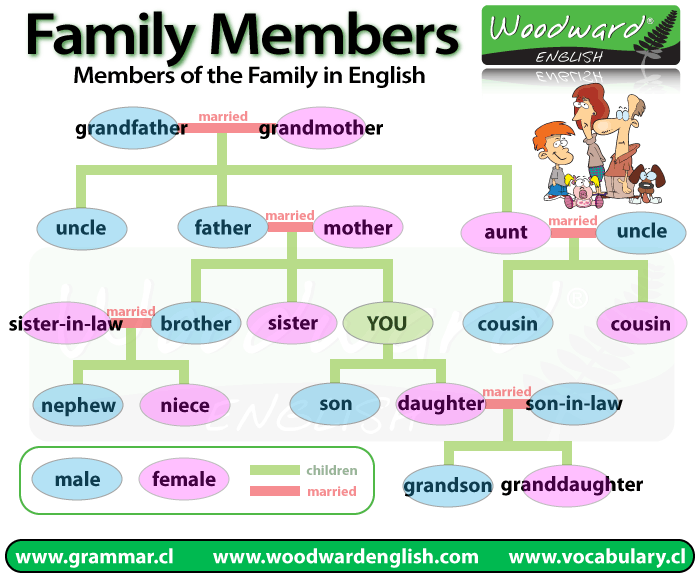
- Family members. (Parents, grandparents, stepsister, niece, cousins, half-sister, brother in law, etc)
- There is/ there are.
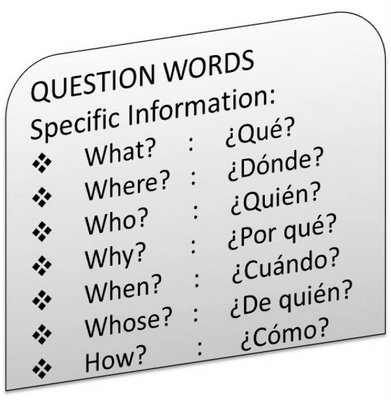
- Wh- questions. How, What, Where, When.
IMPORTANT: Bring a pocket dictionary.
VIDEO
QUESTION WORDS EXERCISES. CLICK HERE.
domingo, 31 de agosto de 2014
HAVE/HAS GOT.
Affirmative sentences
| long form | contracted form |
|---|---|
| I have got a brother. | I've got a brother. |
| You have got a sister. | You've got a sister. |
| He has got a budgie. | He's got a budgie. |
| She has got a dog. | She's got a dog. |
| It has got Bluetooth. | It's got Bluetooth. |
| We have got CDs. | We've got CDs. |
| You have got a nice room. | You've got a nice room. |
| They have got pets. | They've got pets. |
Negations
| long form | contracted form |
|---|---|
| I have not got a brother. | I haven't got a brother. or I've not got a brother. |
| You have not got a sister. | You haven't got a sister. or You've not got a sister. |
| He has not got a budgie. | He hasn't got a budgie. or He's not got a budgie. |
| She has not got a dog. | She hasn't got a dog. or She's not got a dog. |
| It has not got Bluetooth. | It hasn't got Bluetooth. or It's not got Bluetooth. |
| We have not got CDs. | We haven't got CDs. or We've not got CDs. |
| You have not got a nice room. | You haven't got a nice room. or You've not got a nice room. |
| They have not got pets. | They haven't got pets. or They've not got pets. |
Questions
| question | short answer |
|---|---|
| Have I got time? | Yes, I have. No, I haven't. |
| Have you got lots of friends? | Yes, I have. No, I haven't. |
| Has he got a mobile phone? | Yes, he has. No, he hasn't. |
| Has she got a pink car? | Yes, she has. No, she hasn't. |
| Has it got mudguards? | Yes, it has. No, it hasn't. |
| Have we got milk? | Yes, we have. No, we haven't. |
| Have you got a brown bag? | Yes, we have. No, we haven't. |
| Have they got nice books? | Yes, they have. No, they haven't. |
HAVE GOT NEGATIVE. CLICK HERE.
HAVE GOT QUESTIONS. CLICK HERE.
HAVE GOT GAME. CLICK HERE AND ENJOY IT!!!!
VIDEO AND EXERCISES. CLICK HERE.
_________________________________________________________________________________
POSSESSIVE 'S
When we want to show that something belongs to somebody or something, we usually add 's to a singular noun and an apostrophe ' to a plural noun, for example:
- the boy's ball (one boy)
- the boys' ball (two or more boys)
Notice that the number of balls does not matter. The structure is influenced by the possessor and not the possessed.
| one ball | more than one ball | |
|---|---|---|
| one boy | the boy's ball | the boy's balls |
| more than one boy | the boys' ball | the boys' balls |
The structure can be used for a whole phrase:
- the man next door's mother (the mother of the man next door)
- the Queen of England's poodles (the poodles of the Queen of England)
Although we can use of to show possession, it is more usual to use possessive 's. The following phrases have the same meaning, but #2 is more usual and natural:
- the boyfriend of my sister
- my sister's boyfriend
Proper Nouns (Names)
We very often use possessive 's with names:
- This is Mary's car.
- Where is Ram's telephone?
- Who took Anthony's pen?
- I like Tara's hair.
When a name ends in s, we usually treat it like any other singular noun, and add 's:
- This is Charles's chair.
But it is possible (especially with older, classical names) to just add the apostrophe ':
- Who was Jesus' father?
Irregular Plurals
Some nouns have irregular plural forms without s (man > men). To show possession, we usually add 's to the plural form of these nouns:
| singular noun | plural noun |
|---|---|
| my child's dog | my children's dog |
| the man's work | the men's work |
| the mouse's cage | the mice's cage |
| a person's clothes | people's clothes |
Information taken from:https://www.englishclub.com/grammar/nouns-possessive.htm
POSSESSIVE 'S EXERCISES. CLICK HERE.
EXERCISE 2. CLICK HERE.
POSSESSIVE 'S OR VERB TO BE. CLICK HERE.
_________________________________________________________________________________
'Family' is a single word, with many different meanings. People have many ways of defining a family and what being a part of a family means to them. Families differ in terms of economic, cultural, social, and many other facets, but what every family has in common is that the people who call it a family are making clear that those people are important in some way to the person calling them his family.
VERY USEFUL LINK TO PRACTICE. CLICK HERE. ( Try all the activities vocabulary, listening, dialogue, reading, dictation and the game)
_________________________________________________________________________________
POSSESSIVE ADJECTIVES.
POSSESSIVE ADJECTIVES EXERCISES. CLICK HERE.
EXERCISE 2. CLICK HERE.
_________________________________________________________________________________
THERE IS / THERE ARE EXERCISES. CLICK HERE.
READING AND COMPREHENSION/HAVE GOT/THERE IS THERE ARE/FAMILY MEMBERS. CLICK HERE.
_________________________________________________________________________________
WH- QUESTIONS.
_________________________________________________________________________________
WHICH STEP HAVE YOU REACHED TODAY??????
AND REMEMBER...........
domingo, 24 de agosto de 2014
COUNTRIES AND NATIONALITIES
This is our second topic, I am sure that some of you are experts on this, but it is worthy to practice a little bit more to reach perfection.
ENGLISH ACROSS THE WORLD. CLICK HERE.
READING ABOUT CANADA AND OTHER EXERCISES. CLICK HERE.
It is a must to learn by heart the way we say the alphabet in English, please take advantage of this opportunity to practice the correct pronunciation.
THE ALPHABET. CLICK HERE.
To finish let´s do some exercises with verb to be I know that you are "Masters".
LET'S PRACTICE VERB TO BE. CLICK HERE.
COLOURS
COLORR EXERCISES 2 TO PRACTICE LISTENING. CLICK HERE.
GAMES ABOUT COLORS. TRY THEM!!! CLICK HERE.
domingo, 17 de agosto de 2014
VERB TO BE
The verb to be is the most important verb in English. In the simple present tense, to be is conjugated as follows:
Affirmative forms of the verb to be
| Subject Pronouns | Full Form | Contracted Form |
|---|---|---|
| I | am | 'm |
| you | are | 're |
| he/she/it | is | 's |
| we | are | 're |
| you | are | 're |
| they | are | 're |
Interrogative forms of the verb to be:
| Am | I? |
| Are | you? |
| Is | he/she/it? |
| Are | we? |
| Are | you? |
| Are | they? |
Negative Forms of the verb to be:
| Subject Pronouns | Full Form | Contracted Form |
|---|---|---|
| I | am not | 'm not |
| you | are not | aren't |
| he/she/it | is not | isn't |
| we | are not | aren't |
| you | are not | aren't |
| they | are not | aren't |
Examples:
- Is Brad Pitt French?
- No, he isn't. He's American.
- What about Angelina Jolie? Is she American, too?
- Yes, she is. She is American.
- Are brad Pitt and Angelina Jolie French?
- No, They aren't. They are American.
Remember:
- I, you, he, she, it, you, they are subject pronouns.
- am, are, is are forms of the verb to be in the simple present.
- 'm, 're, 's are short (contracted) forms of am, are, is
- 'm not, aren't, isn't are short (contracted forms) of am not, are not, is not
- Use the simple present tense to indicate:
- Routine actions, habits
- Facts
VERB TO BE EXERCISES 2. CLICK HERE.
READING TEXT AND QUIZ. CLICK HERE.
What are subject pronouns?
A subject pronoun, also called subjective or subject personal pronoun, is used as substitute for proper and common nouns.
ExamplesA subject pronoun is used when the pronoun is the subject of the sentence.
John is a doctor - He is a doctor
The laptop is on the desk - It is on the desk
ExampleA subject pronoun indicates:
______ did the job.
I, you, he, she, it, we, and they all fit into the blank and are, therefore, subject pronouns.
- number: singular or plural,
- gender: male or female,
- person: first, second or third person.
Examples
The words "I, you, he, she, it, we, you, they" are subject pronouns. They refer to a person or thing in speech or in writing.
I (first person singular)
you (second person singular)
She (third person singular female)
He (third person singular male)
It (third person singular inanimate )
We (first person plural)
You (second person plural)
They (third person plural)
SUBJECT PRONOUNS EXERCISE. CLICK HERE.
Suscribirse a:
Entradas (Atom)